What Paint Correction Actually Removes (and Why It Comes First)
Correction isn't a wax or a filler. It's careful abrasion, and it decides how good everything after it can look.
October 20, 2026 · 4 min read
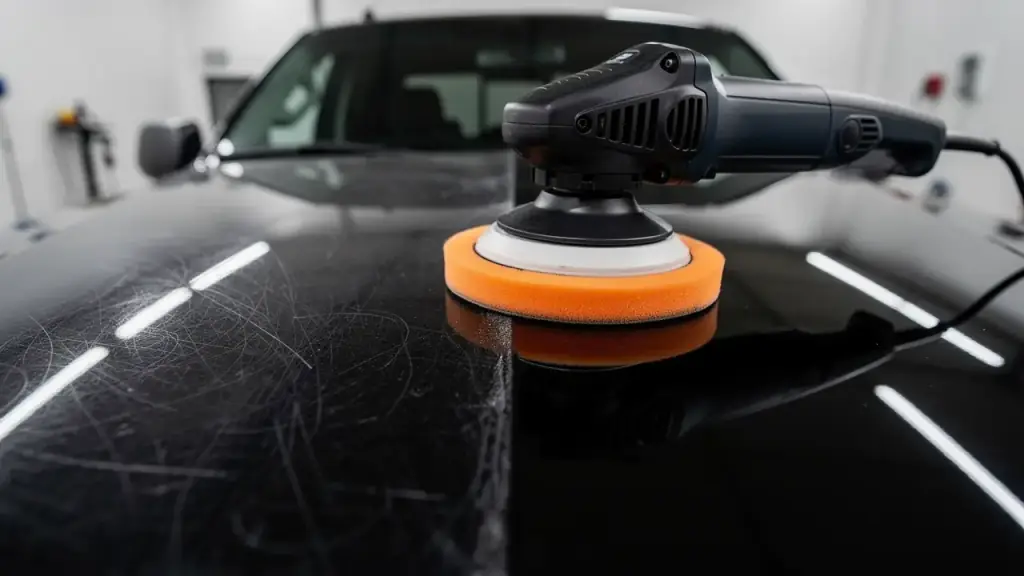
Walk up to a dark car in direct sun and you can usually see it: fine circular scratches, like a spider web laid over the paint. Park the same car in the shade and it looks fine. That's the strange thing about paint defects. They hide until the light hits them at the right angle, and then you can't stop seeing them. Paint correction is the work of taking them out.
What correction really is
The outer layer of modern car paint is a clear coat, a transparent finish that gives the color its depth and gloss. Most visible defects live in that layer, not in the color beneath. Paint correction uses a machine polisher, a pad and a polishing compound to remove a very small amount of clear coat, leveling the surface so the scratches disappear. It's abrasion, done with control.
That's different from a wax or a glaze, which can fill fine scratches for a few washes and then wash out, leaving the defects right where they were. Correction removes the flaw. It doesn't hide it.
Swirl marks
Swirls are the most common complaint, and most of them are self-inflicted. Dry wiping, dirty wash mitts, automatic car washes with worn brushes and rough towels all drag tiny bits of grit across the paint. Each pass leaves a hairline scratch. Over months they stack up into a haze that dulls the color and scatters the light. Swirls are shallow, which makes them the best candidates for correction. A good polish can clear them and bring back deep, even reflections.
Scratches: what comes out and what doesn't
Scratches are a question of depth. The old rule of thumb is the fingernail test: if your nail doesn't catch in the scratch, it's likely sitting in the clear coat and can usually be polished out or greatly reduced. If your nail catches, the scratch has probably gone through to the color or the primer. Polishing can soften the edges and make it far less noticeable, but removing it fully would mean taking off more clear coat than is safe, and the honest answer may be touch-up paint or a repaint.
A good detailer will tell you which category your scratches fall into before any machine touches the car. That conversation matters more than any product name.
Oxidation
Oxidation is what years of sun do to paint. The surface turns chalky and flat, colors look faded, and reds and blacks are the first to show it. On older cars and on panels that face the sky, like hoods and roofs, it's common. Light oxidation polishes out well. Heavy oxidation takes longer and demands more caution, because the clear coat has already thinned. Either way, correction is the step that brings the color back before it's protected.
How the work is done
The process is more patient than people expect. The car is washed and decontaminated so no grit is left to scratch during polishing. The paint is then inspected under strong, direct light, because ordinary shop lighting hides the very defects you're trying to remove. A detailer usually tests a small section first, choosing the pad and compound that remove the flaws with the least amount of material. Then the car is worked panel by panel, with the surface wiped down and checked again after each pass.
- Wash and decontaminate, so the polisher isn't grinding grit into the finish.
- Inspect in strong light and decide what can be removed safely.
- Test a small area, then match the pad and compound to the paint.
- Polish panel by panel, wiping and rechecking as you go.
- Final wipe-down, so what you see is the paint and not leftover polish oils.
Why it comes before any coating or film
Ceramic coatings and paint protection film are meant to stay on for a long time. Whatever is on the paint when they go on is what stays underneath. If swirls are there on day one, they're sealed in on day one. Fixing them later means removing the coating or film first, which costs more time and effort than doing the order right in the first place.
There's a second reason. A coating bonds best to a clean, bare surface, and correction leaves exactly that. So the order is simple: correct the paint, then protect it. It's also why a coating on uncorrected paint can feel like a letdown. The gloss comes from the paint below, and a coating can only show what's there.
When you might not need it
A new car with clean paint may need only a light polish before protection, and sometimes none. Correction removes material, and clear coat is finite, so it shouldn't be done just because it can be. A good shop measures what's there, tells you what's worth removing, and leaves the rest alone.
If your paint has lost its depth, or you're planning a coating or film and want the finish right first, see the Paint Correction page for what Rogers Detailing Studio does. Quotes are free. Call (408) 813-7183, Monday to Friday, and they'll talk through what your paint needs.
Rogers Detailing Studio, (408) 813-7183
Call (408) 813-7183More articles
Paint Protection Film or Ceramic Coating: Which One Does Your Car Need?
The two products do different jobs, and knowing which job your paint needs done is most of the decision.
Window Tint for South Bay Sun: Heat, UV, Glare and Privacy
A good tint job makes the car calmer to sit in. A careless choice can cost you a ticket, so pick the shade with eyes open.