Calipers, Chrome Delete and Headlights: The Details That Change How a Car Reads
The big jobs get the attention, but the small finishing details are what people actually notice from ten feet away.
October 20, 2026 · 3 min read
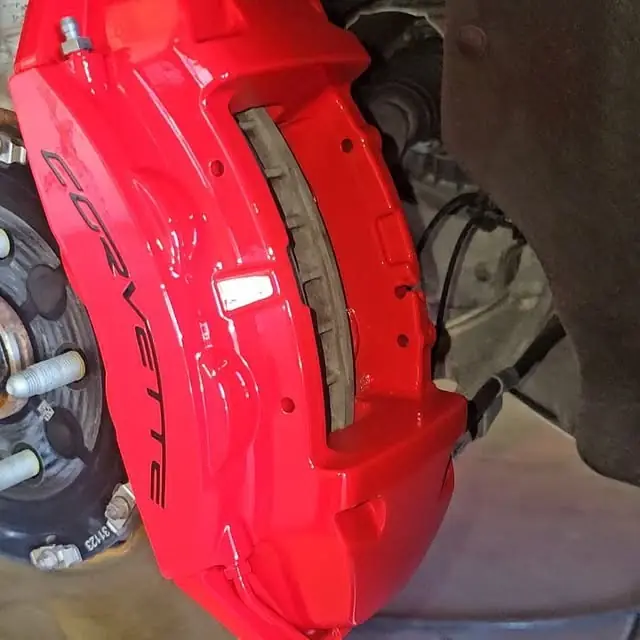
Stand ten feet from a car and you take in three things before you ever see the paint up close: the stance, the contrast around the wheels and the face of the car. Chrome trim, brake calipers and headlights sit exactly in those places. They're small parts that do a lot of the visual work, which is why finishing details can change how a car reads without touching the body panels at all.
Caliper painting
Brake calipers sit right behind the wheel spokes, and on many cars they're a dull cast-iron gray or a flaking, rust-colored mess. Painting them in a clean color gives the wheel a focal point. A bright red caliper behind a dark wheel looks purposeful. A crisp black or a muted color can look quiet and clean. Rogers Detailing Studio's Instagram shows a red Corvette caliper job, which is a good example of how much a small patch of color can change a wheel.
The quality comes from preparation. Calipers live in a hard environment of heat, brake dust and road grime, so the surface has to be cleaned, degreased and prepared before any paint goes on, and the finish needs to be a paint made to handle that heat. Careful masking matters too. Paint that creeps onto rotors, pads or other parts is a safety problem, not only a cosmetic one. When you ask for a quote, ask how the calipers are prepared and protected.
Chrome delete
Chrome trim around windows, grilles and badges catches light and draws the eye. On a car with a dark or sporty personality, that bright metal can clash. A chrome delete replaces the chrome look with a black finish, usually a satin or gloss black, so the trim blends into the body and the windows. The car looks tighter and more cohesive, like it's been drawn with a single pen.
It's a popular change for a reason: it's visible, it's reversible in many cases when done with film, and it doesn't change the car's mechanics. Think about which trim you want to change and how it looks with the paint color. A black delete on a white car pops. On a dark car it's subtle and sleek. Ask the installer how the finish will hold up to sun and washing, and what the plan is if you ever want the original look back.
Headlight restoration
Headlights on most modern cars are polycarbonate plastic with a factory protective coating. Over years of sun, that coating breaks down. The lens turns yellow or cloudy, and the car suddenly looks older than it is. It also affects function, because a hazy lens scatters the beam and reduces how well you can see on dark roads.
Restoration works by removing the degraded outer layer, refining the surface with progressively finer abrasives until it's clear, and then sealing it with a protective layer that does the job the factory coating used to do. That last step is the one that decides how long the result lasts. A lens that's been polished clear but left unsealed will yellow again much sooner. When you get a quote, ask what protects the lens after the polish.
How the three work together
Each of these changes one zone of the car. Together they work like editing a photo: you cut the noise and sharpen the focal points. The front reads cleaner with clear headlights and consistent trim. The wheels read sharper with deliberate caliper color. The side profile reads cleaner when chrome stops fighting the paint.
- Headlights first if the lenses are cloudy. They affect how old the whole front end looks.
- Chrome delete when the trim clashes with the paint or the wheels.
- Caliper color last, to finish a wheel setup that's already clean.
- Keep the palette short. Two or three consistent colors read better than five competing ones.
- Pair the details with the paint. A freshly corrected or protected finish makes every small change look better.
A note on order
If you're planning other work, such as paint correction, ceramic coating or film, mention the finishing details when you book. Some work is easier to do before protection goes on, and a shop that sees the whole plan can do it in an order that makes sense. It also means the car isn't in and out of the shop three times.
The Caliper Painting and Chrome Delete pages show what Rogers Detailing Studio offers for these details. Quotes are free. Call (408) 813-7183, Monday to Friday, and describe what bugs you about the way your car looks from the curb.
Rogers Detailing Studio, (408) 813-7183
Call (408) 813-7183More articles
Paint Protection Film or Ceramic Coating: Which One Does Your Car Need?
The two products do different jobs, and knowing which job your paint needs done is most of the decision.
What Paint Correction Actually Removes (and Why It Comes First)
Correction isn't a wax or a filler. It's careful abrasion, and it decides how good everything after it can look.